
Hackney Part 1: An irregular investigation.
Authorities in Hackney have used the Local Child Safeguarding Practice Review process to investigate complaints about a school's behaviour management system. Is this normal?

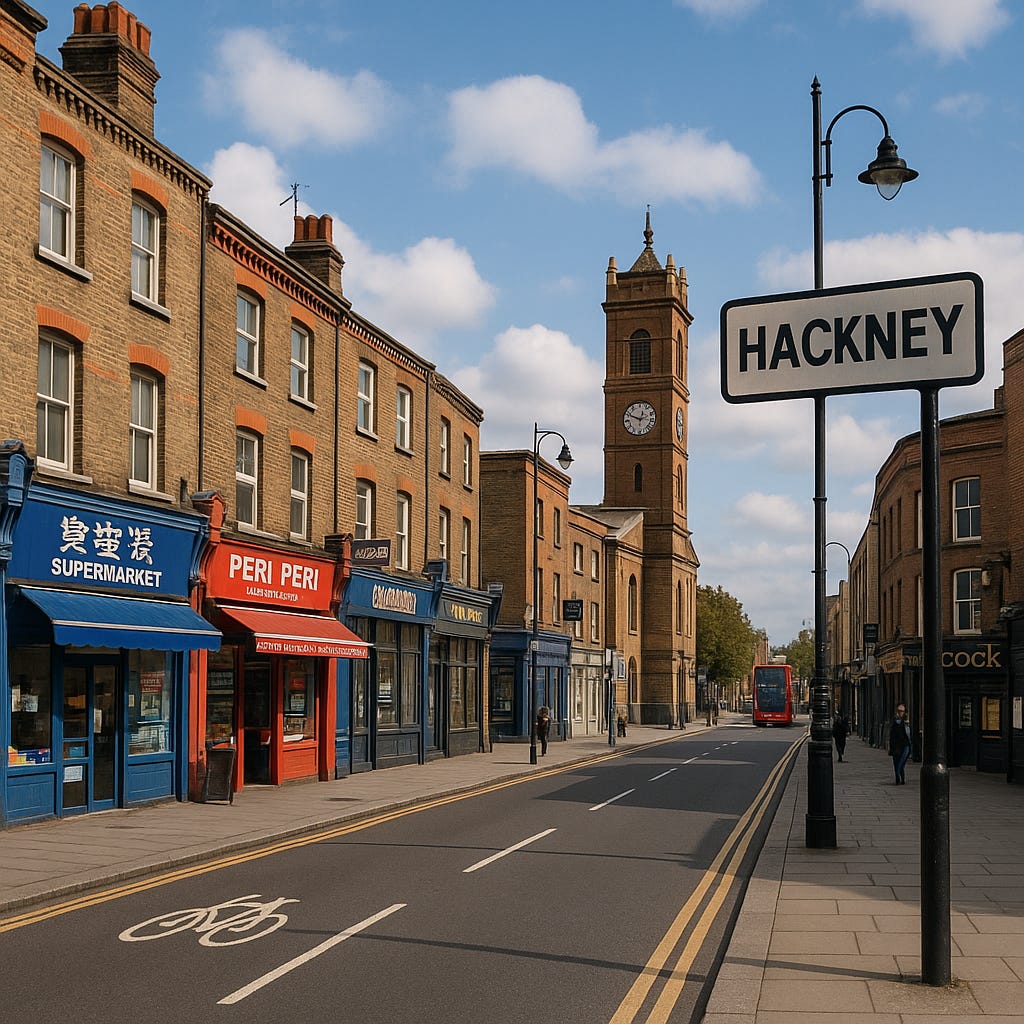
Hackney, in East London, plays by different educational rules. This is the first in a series of posts about the unusual things that happen there.
In this post, I will examine the background to a recent Local Child Safeguarding Practice Review (LCSPR) of behaviour management at Mossbourne Victoria Park Academy (MVPA).
MVPA is a highly successful academy school that opponents of school discipline have targeted. Future posts will look at the accusations against them and whether they have been treated fairly.1 Here, I will start by recapping my views on school shaming and on holding schools accountable. Then I will look at how the authorities in Hackney responded to the school shaming campaign with an entirely novel approach to safeguarding processes.
School shaming
If you are a regular reader of this blog, you will know that one of my big concerns is “School Shaming”. I use this term to describe hate campaigns on social media, or in the media, targeting a school. I have discussed at length the difference between this and legitimate criticism of a school.2 I have deliberately avoided applying the term to official criticism of a school. School leaders can do terrible things and should be held accountable when they do. However, school leaders can also be unfairly maligned and even harassed for doing their job. The three main problems I have with school shaming are:
Some criticisms are made in bad faith3.
The process by which schools are judged is arbitrary and unfair.
The “punishment”, in terms of abuse and reputational damage, is disproportionate and inflicted with what seems like a certain amount of malice.
I have often acknowledged that there may be some truth in the allegations made by school shamers. However, I don’t think that trial by media, or worse, trial by social media, is a good way to resolve matters. If you have worked in schools, particularly shamed schools, then you know that school shaming does not really distinguish between the guilty and the innocent. Running a school well and behaving responsibly will not protect a school leader when the media and the online mob come for them.
Holding schools to account
Again, if you are a regular reader of my blog, you know I believe that schools should be accountable. I have criticised Ofsted4 (and will almost certainly be criticising them again in the near future). However, I do believe that schools should be inspected, and that the consequences of running a school incompetently should be significant. I also think schools should be held accountable for their results, and that parents should have enough choice of school to ensure that nobody is forced to send their children to a badly run school. Equally, I think that crimes committed in schools, by staff or pupils, should be investigated by the police.
I’m less keen on using the political process to punish schools. Local Authorities might, technically, get their legitimacy from being under the auspices of elected councillors. However, in my experience, their agenda has too often not been aligned with the public interest. Too many leaders of highly effective schools have found themselves hated by LA bureaucrats for their success, while mediocre, or even incompetent, school leaders can be members in good standing of the LA in-crowd. I don’t know whether the hostility of some LAs to successful schools is due to misguided egalitarianism, or simply bitterness and resentment at those who make other schools look bad by comparison. It is, nevertheless, something I have experienced directly. For this reason, I prefer the current system, which allows schools to be run by academy trusts, to the Local Authority control system that existed when I began teaching.
Authorities in Hackney find a new way to hold a school to account
All of which leads me to recent events in Hackney in East London, where the Local Authority has found a novel way to amplify a school shaming, and to hold to account a school that is no longer under Local Authority control.
Late last year, there was an unexceptional school shaming campaign against MVPA, one of Hackney’s most successful and popular academies. As with many school shamings, it largely consisted of allegations from parents and ex-staff members that discipline was excessive. These claims had been harvested from the internet by activists and then amplified by poor journalism.5 Such campaigns are fairly common, although only a few are conducted in the pages of a national newspaper. In the past, the Daily Mail has been the worst offender for shaming schools. In this case, the Observer6 took a leading role in repeating unproven allegations and implausible anecdotes.
What is unusual, however, is the role taken by CHSCP — the Hackney safeguarding partnership — which includes the Local Authority. Normally, LAs have no formal role in investigating or disciplining academies. In this case, it was announced that there would be a Local Child Safeguarding Practice Review. This was an unusual step; Local Child Safeguarding Practice Reviews are usually held to respond to cases of serious harm, not political campaigns or pressure from the media.7 According to the statutory guidance on safeguarding, safeguarding practice reviews are to be made in cases where there has been a serious incident. A section on notifying the DfE about serious incidents says:
All incidents meeting the criteria should be notified as “serious harm” or “death”, except where there is a clear reason to notify as “other”, for example, in cases where the notification relates to a perpetrator. A notification regarding the suicide of a child should be made where abuse or neglect is a factor.
There is some provision for exceptions to this:
In some cases, a ‘serious child safeguarding case’ may not meet the criteria for a serious incident notification but may nevertheless raise issues of importance to the local area. That might, for example, include where there has been good practice, poor practice or where there have been ‘near-miss’ incidents. Safeguarding partners may choose to undertake a local child safeguarding practice review in these or other circumstances, in which case they should be clear about their rationale for undertaking such a review and what its focus will be.
Even if we assume the report was commissioned because of “other circumstances”, it should be clear that a situation where parents complain about the behaviour policy of a school does not seem to fit. As if to highlight the contrast, the MVPA review directly follows these two cases on the Hackney website:
Child V, who had complex health and medical needs and died unexpectedly at the age of 7.
Case A, involving a Mr A who pleaded guilty to over 30 sexual offences involving children and adults.
Not only is it odd to see complaints about a school’s behaviour policy listed alongside a child’s death and the crimes of a prolific sex offender, it is also odd for the process to be investigative rather than reflective. Local Child Safeguarding Practice Reviews are intended to be part of the process of improving practice after an incident has occurred. They are not intended to be investigations or disciplinary procedures. Some local authorities make a point of stating this on their website. For instance, Staffordshire:
Child Safeguarding Practice Reviews are learning exercises and not investigations to find out who is to blame for things going wrong, with the overall purpose being that of improving practice.
Similarly, Barnsley:
Child Safeguarding Practice Reviews are not inquiries into how a child died or was seriously harmed, or into who is to blame. These are matters for coroners and criminal courts to determine as appropriate.
Nor is it the case that LCSPRs should be used for accountability purposes. According to the statutory guidance:
[Reviews] are not conducted to hold individuals, organisations, or agencies to account, as there are other processes for that purpose, including employment law and disciplinary procedures, professional regulation and, in exceptional cases, criminal proceedings.
I have struggled to find any examples where schools have been the subjects of Local Child Safeguarding Practice Reviews.8 There have been Serious Case Reviews (a predecessor of LCSPRs) into schools. For instance, there was a Serious Case Review into a school following five convictions for sexual offences by adults who had worked there. However, all the reviews I can find that looked at a school have followed investigations into sexual abuse and sexual assault, usually after adults have been convicted. There seems to be no precedent for using Local Child Safeguarding Practice Reviews as a response to uncorroborated parental complaints about a school. There are other procedures to follow when a Local Authority has concerns about a school.9
Unfortunately, despite wide media interest in the content of the review, there has been little curiosity about why it was commissioned. The facts seem to indicate that the decision to hold the review was highly irregular. There is good reason to scrutinise this and to question whether it was a misuse of safeguarding processes for political or ideological ends. This is not to say that claims about MVPA should not have been investigated, but that this was the wrong tool for the job. We have good reasons to question whether we want safeguarding partnerships, which include LAs, to operate as accountability bodies for schools that are not under LA control. This would remain the case, even if one were to accept that MVPA was guilty as charged, and the review was scrupulously fair. If repeated elsewhere, this has the potential to be a significant increase in LA power over academies, and that should not happen by the back door.
To be continued…
In Part 2, I will look at the debate about the decision to hold a review and why the multi-academy trust responsible for MVPA concluded early on that the review was “unfair” and lacked “due process”.
If you can’t wait to delve into the content of the review, I recommend this blog post by Tom Bennett and this one by Greg Ashman.
Most recently in a five-part series of posts about how school shaming works and how it is unfair.
School shaming is unfair. Part 1
School shaming is unfair. Part 2
School shaming is unfair. Part 3
I don’t want to understate how often these campaigns are dishonest. School shamers typically show absolute indifference to the truth of the accusations they amplify.
England’s schools inspectorate.
In this post, I discussed the obviously political nature of the campaign against the school. In this post, I discussed how unconvincing complaints could be given more weight by focusing on quantity rather than quality, and by leaning into subjective interpretations of what happened, rather than sticking to the facts.
At the time, the Observer’s education coverage often reported claims by internet activists as if they were news. The blog posts I wrote about their most sensational and inaccurate stories are too many to list, but feel free to search this site for them.
If you doubt that this is what happened, then read page 4 of the review. It explains that official interest in the school began with complaints made by a group of campaigning parents, some of whom set up the Educating Hackney website. As I explained in this post, this site was originally called “No Need to Exclude”, and the Independent Socialist group of Hackney councillors claimed responsibility for it. This website, and the media coverage, led to “an emergency meeting of the CHSCP’s Case Review sub group” which decided to commission the LCSPR.
I realise that my inability to find something is, at best, the absence of evidence, rather than evidence of absence. I would be grateful if others could try to locate any LCSPRs prompted by similar concerns. I can only say that, even with the help of AI, I could not find anything close.